Comfort and Efficiency with Energy-Saving Window Film For Homes Solutions
Energy efficiency has become a major priority for homeowners as electricity costs continue to rise and climate concerns increase worldwide. One of the simplest yet most effective upgrades for improving home efficiency is using Energy-Saving Window Film For Homes. This modern solution helps reduce heat loss in winter and limits heat gain in summer while maintaining natural light inside living spaces. Unlike heavy renovations or expensive window replacements, window films are cost-effective, easy to install, and suitable for almost any type of residential property.
Many homeowners struggle with uncomfortable indoor temperatures, fading furniture, and excessive use of air conditioning or heating systems. Energy-saving window films directly address these issues by improving insulation and blocking harmful solar rays. As a result, homes become more comfortable, energy bills decrease, and interior spaces remain protected from long-term damage.
What Is Energy-Saving Window Film For Homes?
Energy-Saving Window Film For Homes is a thin laminate material applied directly to glass surfaces in residential buildings. It is designed using advanced layers of polyester and metalized coatings that regulate the amount of heat and light passing through windows. While it appears almost invisible, its performance can significantly change how a home retains or reflects heat.
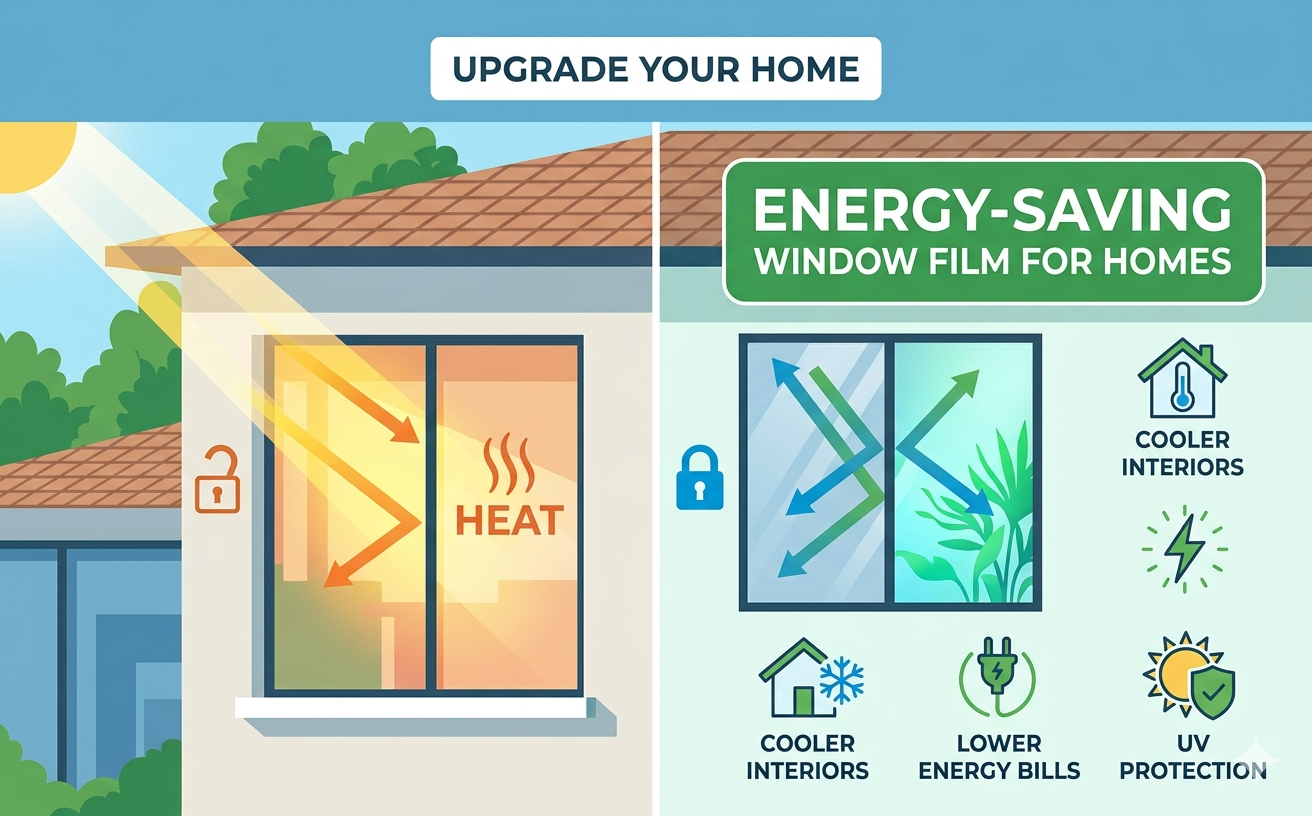
These films are engineered to act as a thermal barrier. In summer, they reduce solar heat gain by reflecting infrared radiation away from the home. In winter, they help retain indoor heat by minimizing heat escape through glass surfaces. This dual action makes them a year-round solution for energy management.
Additionally, Energy-Saving Window Film For Homes come in various types, including reflective, tinted, and low-emissivity versions, each offering different levels of performance depending on household needs.
How Energy-Saving Window Film Works
The working mechanism of Energy-Saving Window Film For Homes is based on solar control technology. Sunlight contains ultraviolet (UV), visible light, and infrared radiation. While visible light is useful for illumination, UV and infrared rays are responsible for heat buildup and material damage.
Window films use multiple microscopic layers to selectively filter these components. UV rays are blocked almost completely, protecting furniture, flooring, and curtains from fading. Infrared radiation is either absorbed or reflected, reducing heat transfer into the home. At the same time, visible light is allowed to pass through, maintaining natural brightness indoors.
Some advanced films also include low-emissivity coatings that reflect indoor heat back into the room during colder months. This improves insulation and reduces the workload on heating systems.
Key Benefits of Energy-Saving Window Film For Homes
One of the biggest advantages of installing Energy-Saving Window Film For Homes is the reduction in energy consumption. By controlling heat transfer, homeowners rely less on air conditioners and heaters, which leads to noticeable savings on utility bills over time.
Another major benefit is improved indoor comfort. Rooms stay cooler in summer and warmer in winter, eliminating hot spots near windows or cold drafts during colder months. This creates a more balanced and pleasant indoor environment throughout the year.
Window films also provide UV protection, blocking up to 99% of harmful rays. This helps preserve interior furnishings such as sofas, carpets, artwork, and wooden flooring. Over time, this protection can save significant replacement costs.
Privacy is another added advantage. Certain types of films reduce visibility from outside during daylight hours, allowing homeowners to enjoy natural light without compromising privacy.
Finally, window films improve safety by holding shattered glass together in case of breakage, reducing the risk of injury from flying glass fragments.
Energy Savings and Cost Efficiency
Installing Energy-Saving Window Film For Homes is a financially smart decision for long-term savings. While the initial investment is relatively low compared to window replacement, the return on investment is achieved through reduced energy bills.
Homes with large glass surfaces often experience significant energy loss. By applying window film, heat transfer is minimized, which can reduce cooling and heating costs by a noticeable percentage depending on climate conditions and film quality.
Over time, these savings accumulate, making window film one of the most cost-effective energy efficiency upgrades available in the residential market. Additionally, because installation is quick and does not require major construction, labor costs remain minimal.
Types of Energy-Saving Window Film For Homes
There are several types of Energy-Saving Window Film For Homes available in the market, each designed for specific needs.
Solar control films are the most common type. They reduce glare and heat from sunlight, making them ideal for sunny climates or rooms exposed to direct sunlight.
Insulating low-emissivity films focus on thermal performance. These films help retain heat during winter and reduce energy loss through glass surfaces.
Decorative energy-saving films combine aesthetics with functionality. They provide patterns or frosted designs while still offering UV and heat protection.
Safety and security films are thicker and designed to hold glass together during impact, while also providing moderate energy efficiency benefits.
Choosing the right type depends on factors such as climate, window orientation, and desired level of privacy or insulation.
Installation Process and Maintenance
Installing Energy-Saving Window Film For Homes is a straightforward process that can be done by professionals or experienced DIY users. The glass surface must be thoroughly cleaned before application to ensure proper adhesion. The film is then carefully applied using a water-based solution to prevent air bubbles and ensure smooth placement.
Once installed, the film typically requires a short curing period during which moisture evaporates and the film fully bonds to the glass surface. After this period, it becomes virtually maintenance-free.
Maintenance is simple and requires only regular cleaning using a soft cloth and non-abrasive cleaning solution. Harsh chemicals or rough materials should be avoided to prevent damage to the film surface.
Environmental Impact and Sustainability
Energy-saving window films contribute positively to environmental sustainability. By reducing energy consumption in homes, they indirectly lower greenhouse gas emissions associated with electricity production.
Less reliance on air conditioning and heating systems means reduced fossil fuel usage in many regions. This makes Energy-Saving Window Film For Homes an eco-friendly choice for homeowners who want to reduce their carbon footprint.
Additionally, since window films extend the lifespan of interior furnishings by protecting them from UV damage, they also reduce household waste over time.
Choosing the Right Window Film for Your Home
Selecting the right Energy-Saving Window Film For Homes depends on several important factors. Climate plays a major role; hotter regions benefit more from solar control films, while colder regions may prefer insulating films.
Window orientation is also important. South-facing and west-facing windows typically receive the most sunlight and may require stronger heat rejection films.
Homeowners should also consider aesthetics, as some films are more reflective or tinted than others. Privacy needs, budget, and local building regulations can also influence the final choice.
Consulting with a professional installer can help ensure the right product is selected for maximum performance and durability.
Conclusion
Energy efficiency is no longer a luxury but a necessity in modern living, and Energy-Saving Window Film For Homes offers a practical and affordable solution for homeowners. By improving insulation, reducing energy bills, protecting interiors, and enhancing comfort, this simple upgrade delivers long-term benefits without major renovations.
As energy costs continue to rise and environmental awareness grows, window film technology stands out as one of the most effective ways to create smarter, more sustainable homes. Whether for new properties or older houses, it provides a balanced combination of comfort, savings, and protection that makes it a valuable investment for any homeowner.